I originally posted “John and My First Ambulance Ride” for The Roadless Travel Blog on December 12, 2011; however, I originally wrote it as an email to family and friends on August 31, 2011. I was in going on a day trip around Japan with my colleague and friend, John, but he had an unexpected health emergency– one that left an impression on the mind but not the wallet.
Over the course of a 6 week teaching term aboard the ship, I get to know my roommates very well. After all, we are crammed into a Stateroom that is only 20 feet long by 15 feet wide, about the size of a standard living room, except this one has 3 bunk beds, two sinks, and a huge row of locker/cabinets/fold-down desks for us to use. Therefore, the actual living space is only about 10 feet long by 10 feet wide, or about the size of a standard bedroom. It’s kind of like being in college all over again. So, as I said previously, I get to know my roommates really well. We live together, work together, eat together, and spend our down time together. Even when we get off of the ship, we seem to all hang out together. I have, as a result, built some great friendships over the past year teaching for the Navy.
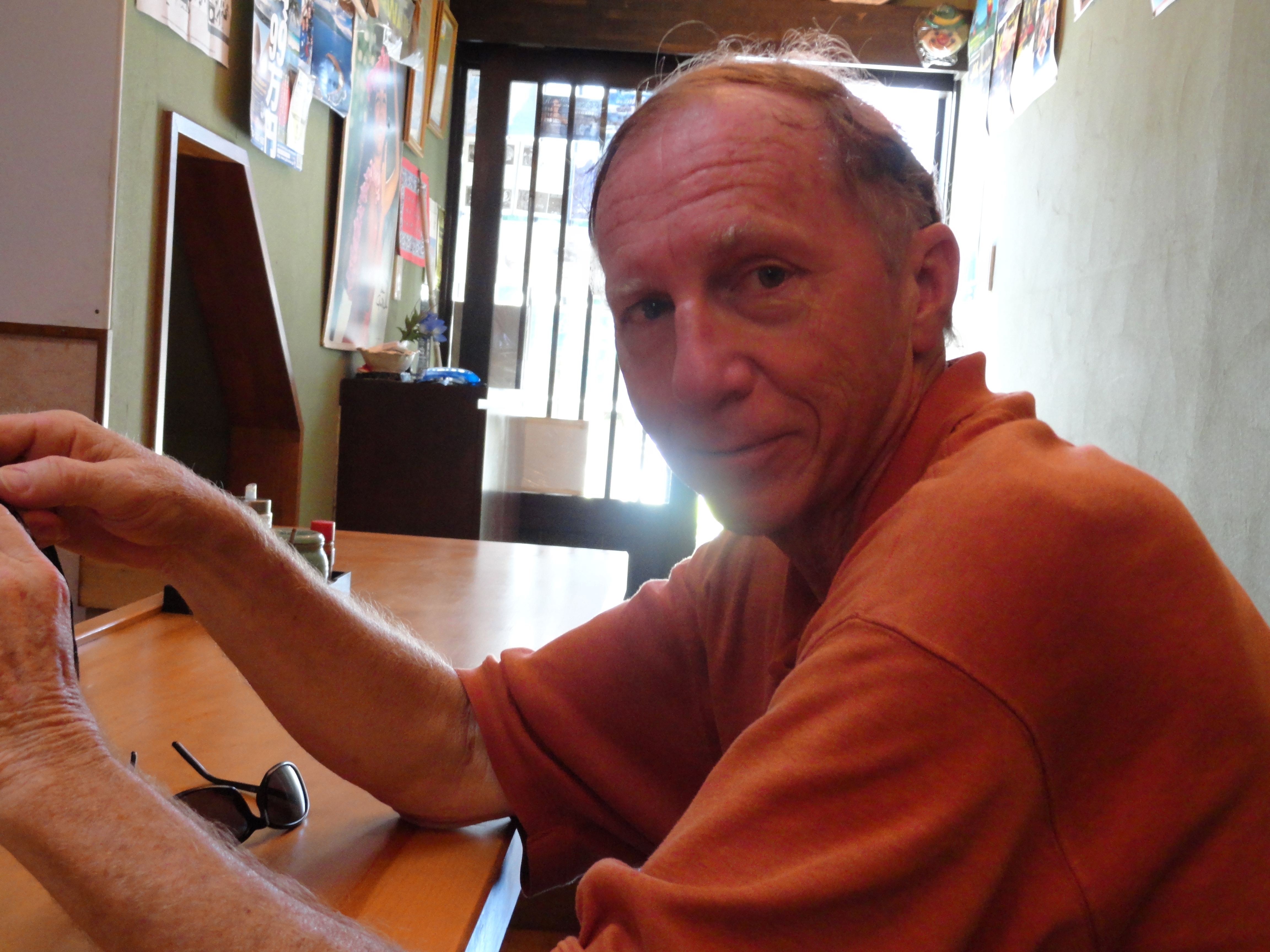
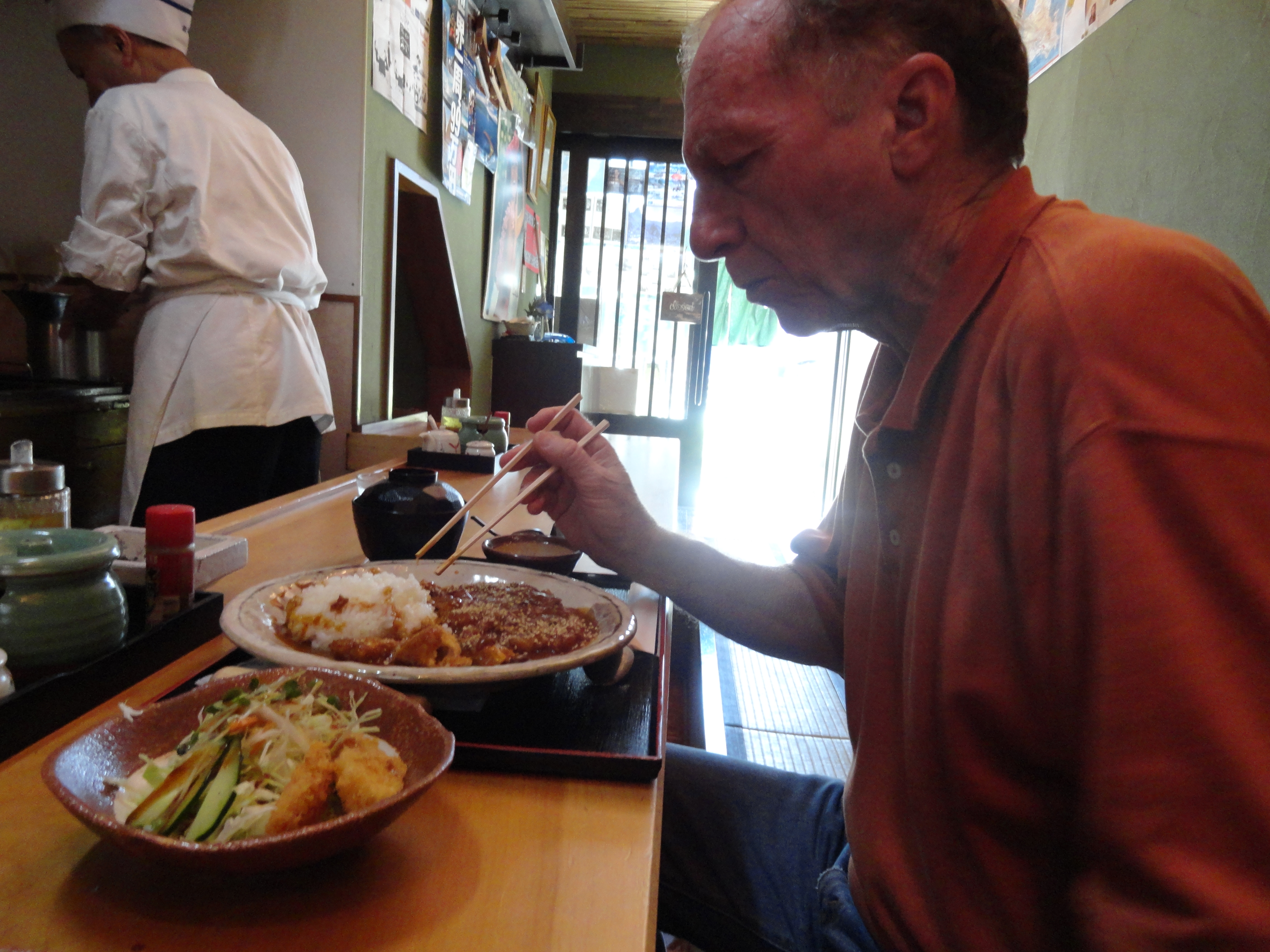
Another such friendship is a 65-year-old history instructor named John. In spite of his age, John is a healthy, vibrant, and all together fun and interesting individual to hang out with. We would spend many a nights talking, joking, educating each other in our respective fields of expertise (and please don’t think I am considering myself an “expert” in English, I am far from it). Regardless, we would attempt to impart wisdom and experience to each other. Like me, John has a spirit that wants to go, do, and see all that he can– hence our chosen field of work. Both John and I were excited about pulling into port in Japan so we could immediately go and see some sights, eat some non-ship food, and get our land legs back underneath us. On the first night we immediately went with Sheila (the 60 year old Math instructor) to Chili’s on the Naval base for some fajitas (I know. I know. “Fajitas in Japan.” Well, the ship had slowly been eroding my appreciation for good Mexican food, so we all needed a fajita and margarita fix). We all ordered some drinks, had a good time, and decided that the following night we would go get some drinks again, this time we would go to The Officers Club (O-Club) on base since both the food and drinks are cheap. Before we were set to go to the O-Club however, John and I were going to go into Yokosuka for some Japanese curry, some local sights, and a good walk (something we don’t get a lot of on the ship). We did go get some Japanese curry, saw some local sights, and had our good walk, but the heat and humidity really took a toll on both of us. We truly needed a nice cold drink when it came time for it.
The third day in Japan is one that John and I were truly looking forward to because we had planned on taking the train into Kamakura. Kamakura is one of the truly ancient cities in Japan, and it remains so much so because the Americans decided not to bomb it during WWII simply because of the rich history contained within. We had both been there before, but it is one of those places that is absolutely worth a second look. So, we woke up early and proceeded to walk the two miles to the train station in order to take the 30 minute train ride into Kamakura. During our walk John expressed how he wasn’t feeling the greatest, possibly due to something he had eaten at the O-Club. I asked him if he felt okay to still go, and he said “yes.” So we boarded the train and we were off, on our way to see Kamakura at about 9:30 A.M.
(The following was written on my iPod Touch as I sat in Uwamachi Hospital in Yokosuka, Japan)
We were about 15 minutes into the train ride when John started looking a little. I asked him if he was feeling okay, and he said he “could really stand to sit down” (since we had been standing during the entire train ride on account of the train being full). We happened to be stopped at the Zushi train station and John walked off of the train and went straight for some chairs in the staging area of the station. He sat down with his forearms on his knees and his head dropped between his legs. I thought he was poised to vomit, so I moved his backpack out-of-the-way and pulled myself back a little bit so as to not catch any of his vomit on my shoes. I then looked around to see if I could see a trash can that I could fetch him, and when I looked back at John he began to slump further down between his legs. Again, I thought he was preparing himself to vomit, but then I noticed that his left arm went stiff and his weight was beginning to carry him to the floor. I was able to drop my backpack, catch his fall, and prop him back up in his chair. Once I pushed him back into his chair, this jolted his eyes open but there wasn’t a look of consciousness and his pupils were contracting. He began to take involuntary and shallow gasps of air, then his stomach began to swell and his breathing appeared to stop. The color immediately left his face, I felt for a pulse, and then I began to yell his name and slap the back of his neck. He gave a start and began to gasp again, but a conscious look had yet to return to his face. I continued to hold his head in my hands, slap the back of his neck, and yell his name. After about 10 seconds it was if lucidity was beginning to return so I took out my water bottle and rubbed the cold condensation on the back of his neck and instructed him to take a drink. The life finally seemed to snap back into him and he asked me what had happened. I was surprised that he didn’t know because his eyes remained opened the entire time. He slumped back with his forearms upon his knees, took a shallow sip of water, and closed his eyes. This time, I didn’t take my eyes off of him for fear he might pass out again. I watched him for about two minutes and tried to figure out for myself what had just happened. He (being the extremely nice man that he is) proceeded to apologize for his current state and the fact that we should probably needed to go back to the Naval base. I told him he didn’t have anything to apologize for and that we definitely need to go back, but we shouldn’t rush it because, as I told him, “I think you just had a stroke.”
We sat for another 10 minutes, all the while John said that he felt dizzy. I wanted him to rest before we attempted to climb the flight of stairs that we needed to climb in order to go to the other side of the staging platform so we could catch the train back into Yokosuka. We waited for another five minutes and John proceeded to indicate that he wanted to try to make it to the other side of the tracks, so we stood up and I carried both of our bags as we slowly walked to the stairs. He was wobbly and very obviously weak. Thankfully, there was an escalator that took us to the top of the bridge that went over the tracks. As John leaned on the rail with both hands, I stood behind him in case he fell. As we got to the top, I had to then take under the arm and guide him across the bridge to the opposite escalator. As we stepped onto the descending escalator John looked like he was beginning to fatigue so I took up a position in front of him, again, in case he fell. He clutched the rail with both hands and once we got to the bottom of the escalator, he took two steps, clutched the hand rail that lead to the staging area for the train and he again began to slump over. I dropped his backpack and caught him as he fell to the concrete floor. I placed one hand behind his head and used the other to pull his body flush with the ground. The Japanese gentleman with his small boy who rode the escalator down behind me looked at us and said something in Japanese that I didn’t understand. I asked him simply, “help!,” and he nodded his head yes. A few train workers that must have seen us or who heard my call came running over. They proceeded to kneel over us. As John lay there he again stiffened up and began very shallow breaths. Again, I thought that he stopped breathing and had a very pale and blank stare. Again, I checked for a pulse and I couldn’t feel anything. Due to the fact I had one hand behind his head in order to keep it up off of the concrete, I began to do chest compressions with my other hand. After about 5 five chest compressions, and each one accompanied by my yelling, “John!,” he took an involuntary gasp, released what seemed like all of his air, didn’t inhale again, and his stomach again began to swell. At this, a female Japanese train worker began to unbuckle his pants. I didn’t know why she was doing this, but I ignored her because I truly thought John was dying.
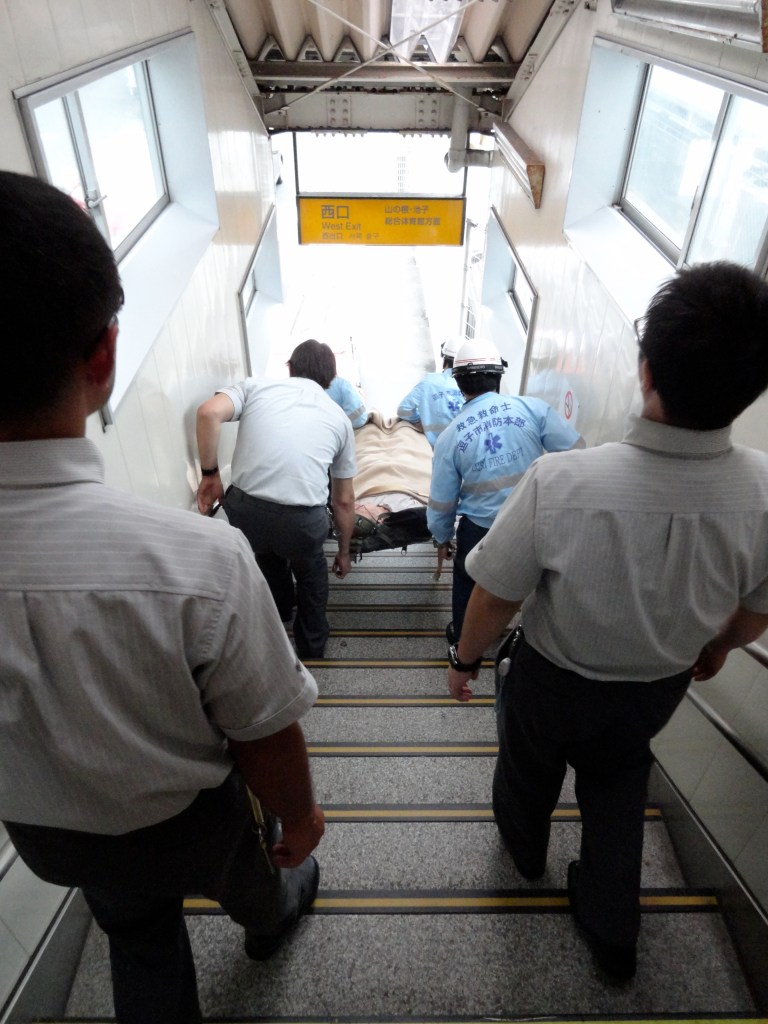
Another worker grabbed John backpack that I had dropped and placed it behind his head. After this, I was able to use both of my hands to do chest compressions and lightly slap John’s face in order to try to bring him back to consciousness. After what felt like 5 minutes, but was probably only 5 seconds, I was about to begin mouth to mouth, however, John took a short breath and his eyes again had a mild semblance of lucidity. He looked around, asked what happened, and I told him “it was okay” and “we were going to get [him] to the hospital.” Thankfully, the rescue workers were on their way with a stretcher. I helped them load John onto the stretcher and then I helped them carry him to the nearest train station kiosk. In the worker kiosk, the workers covered John in a blanket and told me in very limited English that the ambulance was on its way (I think the Japanese gentleman that had followed us down on the escalator had called the emergency personnel). I tried to communicate (in broken Japanese and Pantomime) what had happened and they tried to communicate to me (in broken English and pantomime) what they needed from me by way of information. Once the Zushi Fire Department showed up about 10 minutes later, however, one of the paramedics spoke limited English, which was both comforting and helpful. I was able to communicate what had just happened to John and both the fire department and the train workers were able to transfer John onto the fire department’s stretcher.
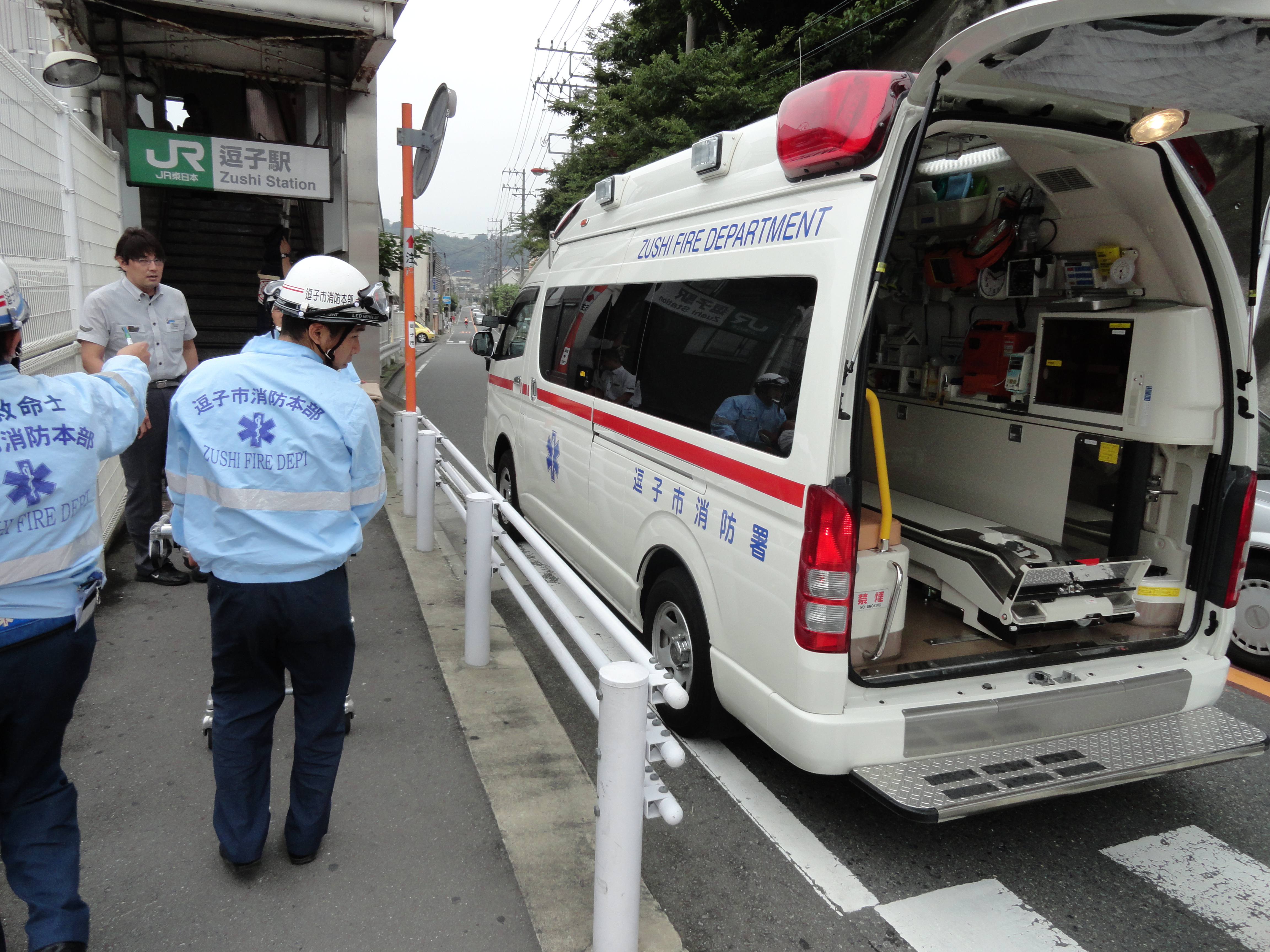

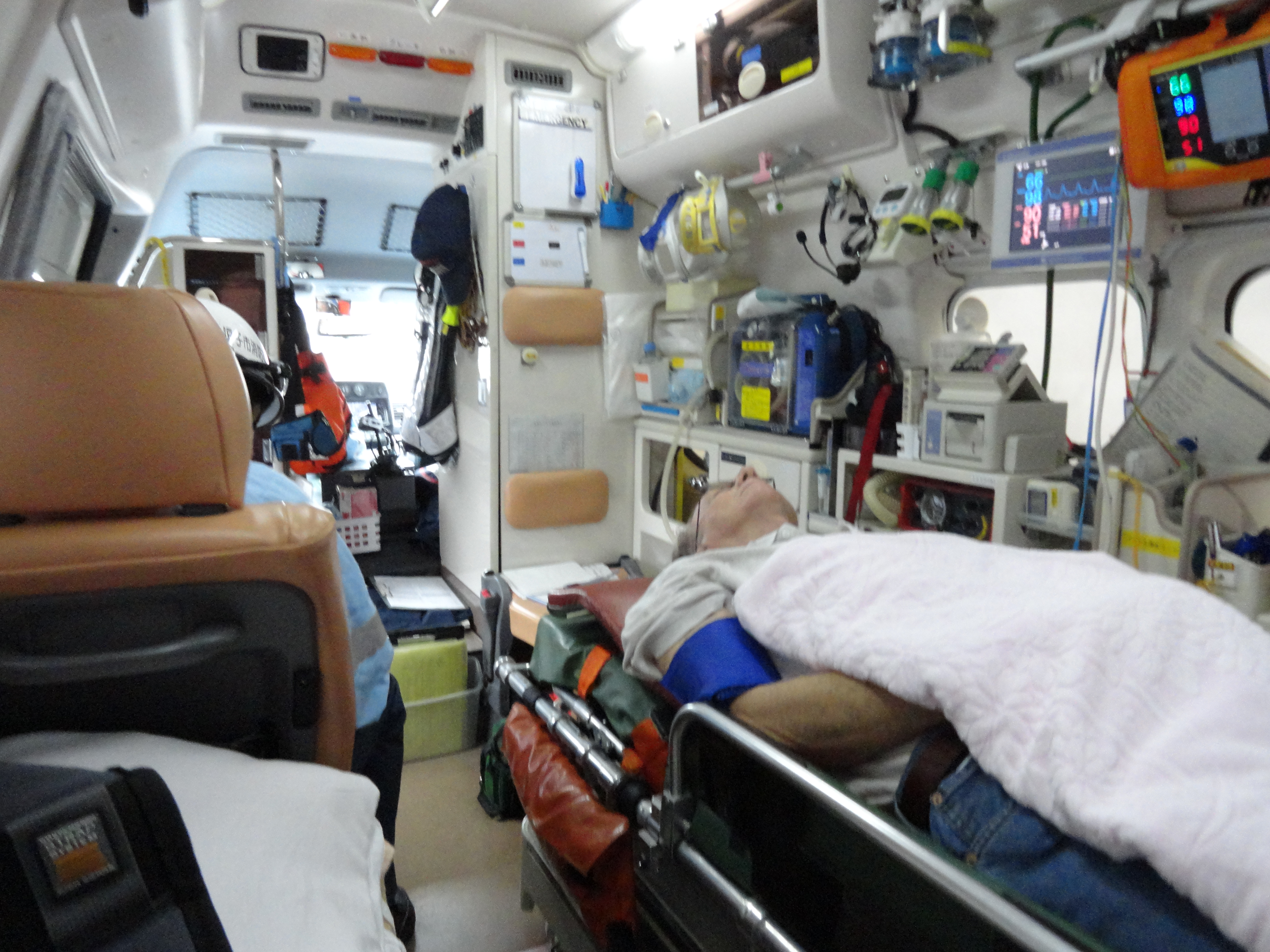
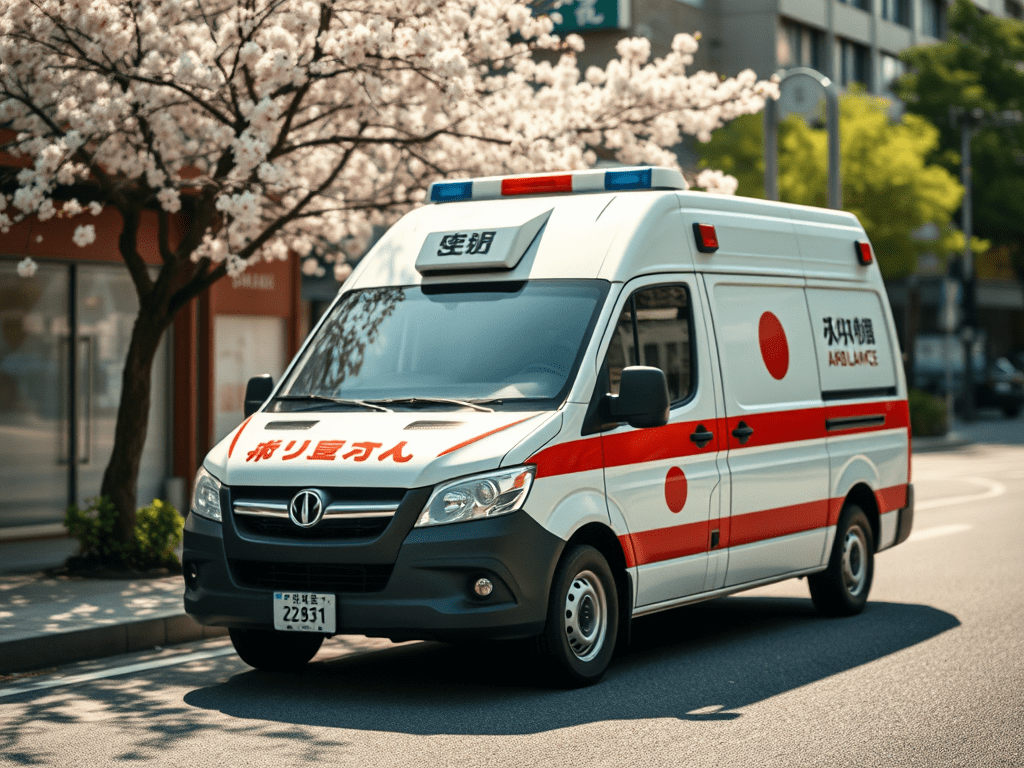
From there, they carried the stretcher up the stairs and out to the street where the ambulance was waiting. After they loaded John into the ambulance, I too climbed in. They immediately checked John’s blood pressure and he was 85 over 45, which, as indicated to me by the very helpful paramedic that spoke limited English, that that was “hypotension,” or very low blood pressure. After about 20 minutes of us sitting in the back of the ambulance, some questions about John’s contact information, and trying to locate a hospital we could go to that had a doctor that could handle severity of the situation (I guess being Saturday had something to do with the availability of doctors in Japan), the driver flipped the siren switch and we were off to Uwamachi Hospital in Yokosuka.And that is where I sit now, next to John as he sleeps. The doctor, Dr. T. Hibino, told me John was dehydrated, his blood pressure was deathly low, but it didn’t appear to be a stroke– which I thought it might have been. All I could do as we made our way over to the hospital was pray and keep a very close eye on his heart rate on the machine in the ambulance. I didn’t want his heart to stop like I thought it did at the train station. All I could think was that this guy is supposed to be going on a road trip with his wife when he got home. After all, he had been talking about it for the past 6 weeks aboard the ship, and now he might not make it because of some damned heat and humidity in Japan. I didn’t want to have to have to call his wife and tell her that he died in my arms. I didn’t want to have to be the last person that saw him alive. But here I sit, and his is, thankfully, still alive. Now, I only want this guy to get home to his wife so I can get back to missing mine. Wake up, John, you damned Mic (I had been calling this most of the term since we had become good friends, he is Irish, and I only meant it as a term of endearment) you scared the hell out of me, but this will make for one hell of a story. After all, it was my first ride in an ambulance.
(And that is the end of my story as written next to John’s hospital bed).
It was my first ride in an ambulance. I am glad that it wasn’t for me, but I am also not glad that it was for one of my friends. The reason I wrote all that, and as detailed as I did, was because I thought I was going to have to give the story to John’s wife about how he died. Thankfully, John woke up from a deep sleep in the hospital that day, got re-hydrated, and we took a cab back to the Naval base, where, believe it or not, we were back at Chili’s that same night, with Sheila, getting John something to eat. This time however, we skipped the beer and had only water. Something that was really interesting was that when I asked John what was going on inside of him when he blacked out and apparently stopped breathing; he told me that everything was black, but he could hear my voice yelling “John! John!” He said he couldn’t see me, but he could hear me and he was trying to figure out where I was. Thank God, really, thank God that John did finally find where I was! And if that isn’t good news, then I’ve got even greater news because today (August 31st) I just got an e-mail that John made it back home to his wife in Reno, Nevada. We had hesitatingly sent him on a plane home the day after his ordeal and we were all concerned his blood pressure may dip again, but it didn’t, and I sure by now he is on his road trip exploring the American countryside. And on one last note concerning the whole hospital visit in Yokosuka: John’s bill for the ambulance ride, the doctor’s visitation, the medicine the doctor prescribed, and the temporary stay in the hospital all amounted to a surprising 5,200 Yen, which in U.S. dollars is about $65.00. It seems to me we get better treatment from Japanese medicine than American. Hell, I’ll ride in a Japanese ambulance over an American any day.





 Shinnformation Station

Leave a comment